Chemistry in Biology
BONDING BASICS
IONIC (e- transfer) COVALENT (e- sharing)
SALT Polar (unequal sharing) Non-Polar (equal sharing)
WATER ALCOHOL
Link to VISION LEARNING ANIMATIONS ionic, polar covalent and non-polar covalent bonding animations and info.
http://www.visionlearning.com/en/library/Chemistry/1/Chemical-Bonding/55
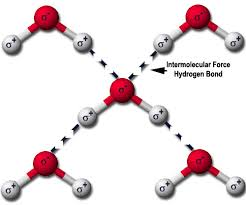
INTERMOLECULAR FORCES-Water behaves uniquely due to it's strong intermolecular attractions or attraction between molecules due to H-bonding which isn't really bonding at all.
Questions: (3 higher order—analysis, synthesis, evaluation)
1) Can you identify which type of macromolecule is composed of chains of amino acids that are joined together by peptide bonds?
2) Explain and justify how the chemical make-up of proteins and nucleic acids differ from the make-up of carbohydrates and lipids?
3) Can you elaborate on the main role of nucleic acids in living things?
4) Based on what you know which class of macromolecules is primarily used as a rapidly available energy source?
5) How would you compare/contrast carbohydrates vs. proteins?